SK58
Birders
| Locations in SK58: Langold Lake |
Updated
February 25, 2019
|
 Latest
News- VFTPT
Who
Events
Contacts
Publications
Map
Locations
Join Us
Video
Gallery
Links
Species
Home
Latest
News- VFTPT
Who
Events
Contacts
Publications
Map
Locations
Join Us
Video
Gallery
Links
Species
Home
email
SK58 Birders
est. 1992
website est. 1996
Langold Lake (SK5786)
How to get there:
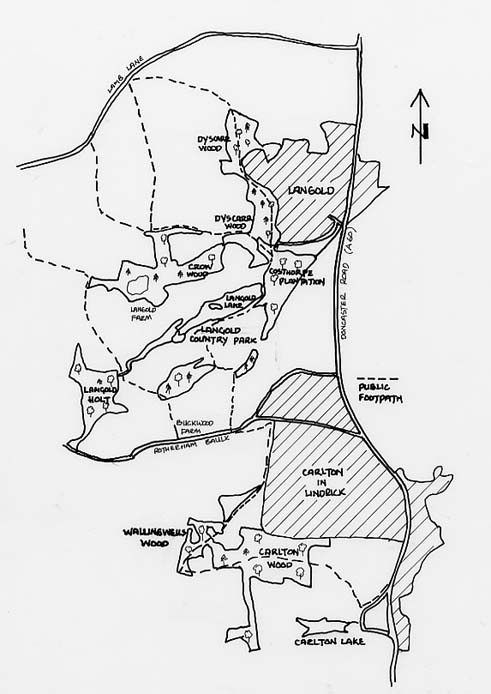
From Worksop take the A60 Tickhill road north for 5 miles, passing through Carlton in Lindrick, Costhorpe and into Langold village. Ignore the first turn off the main road, and continue to the first proper left turn (Ramsden Avenue), opposite the old fire station, and turn immediately left again onto Church Street. Continue along here-the main car park is at the end.
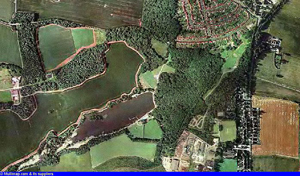
Site Description: A man-made lake within the confines of this small country park, with fields to the south and east and broad-leaved woodland to the north. The lake has broad vegetation free northern end, narrowing at the southern end, becoming progressively more vegetated and tree lined. A small wooded island provides shelter in the middle of the lake. The majority of wildfowl congregate in the bay on the leeward side. Avoid visiting during weekend afternoons if the sun shines-the site attracts hoards of kids, dog walkers, canoeists and fishermen. It is advised to concentrate on the woodlands via a circular walk as a starting point, and then continue around the perimeter of the lake (approx 1.5km, or just under a mile in circumference). A small cafe offer hot & cold drinks, ices as well as snacks. Andy's Cafe in the main car park is also worth a visit.
Rarities: Locally rare Shoveler is annual here. Goldeneye and Pintail are rarer and have occurred here in the past. Goosander has also occurred in good number in good years. Hawfinch has bred in the wood north of the lake, but an early start is advised. Osprey occurs in spring and autumn and on several occasions has been seen to catch fish, before moving on. In recent years we have recorded Eider, Red-necked Grebe and Black-necked Grebe.
Resident Birds: The diverse habitats ensure a healthy list if one visits early enough to avoid the crowds. The woods did regularly hold all 3 woodpeckers as well as Hawfinch and should provide a start point for any visit. A circular walk through the wood will bring you out at the lake, where the wildfowl can be scrutinised. The resident wildfowl include stable populations of Mallard, Tufted Duck, Coot and Great Crested Grebe. More recent additions include Barn Owl to the area.
Langold Lake by seasons:
Winter: Obviously the wildfowl from as far as Siberia and Asia, which arrive in the autumn, are the main attraction. Wildfowl numbers peaked in the mid 1990's when it was possible to see over 400 wildfowl of 9 species, with significant numbers of Coot, Gadwall and Tufted Duck. Alas for reasons unknown numbers have dropped off in recent years. However a cold snap and E winds will ensure a good variety including 100's of Coot, Dozens of Mallard and Tufted Duck, with varying numbers of Gadwall, Mute Swan, occasionally Pochard, Little Grebe with very occasional Wigeon, Goosander, Goldeneye and Pintail. Do not neglect the trees; a wintering flock of Siskin can top 80 birds, with a more normal 40-50 present. In recent winters Water Rail have been recorded. Winter storms sometimes attract the larger gulls-so check them out. Hen Harrier has wintered in the fields to the SE of the park.
Spring: Wildfowl tend to move out. Hirundines also stop off to feed. Osprey can also pass through. Woodpeckers occur in the wood, which should not be neglected. Warblers also occur on the woodland fringes and around the lake. The old pit top site can produce Ring Ouzel during migration.
Summer: At the height of the breeding season Langold Lake can become very busy with swimmers and picnickers. However, 1-2 pairs of Great Crested Grebes breed, as do the resident Tufted Duck, Mallard and Coot. The woods can also be worth a visit.
Autumn: Can be fairly quiet here, although wildfowl numbers build up from late August. Hirundines feed over the lake. Reed and Sedge Warbler occasionally occur on passage.
A group focused on recording the bird life of a single 10km square between Sheffield, Rotherham & Worksop
content & design by Andy Hirst